PurrSafe guide
Cat Mesh for HDB Windows: What Singapore Homeowners Should Check
Understand what to check around an HDB window before arranging a professionally measured cat-mesh installation.
By PurrSafePublished 7 min read
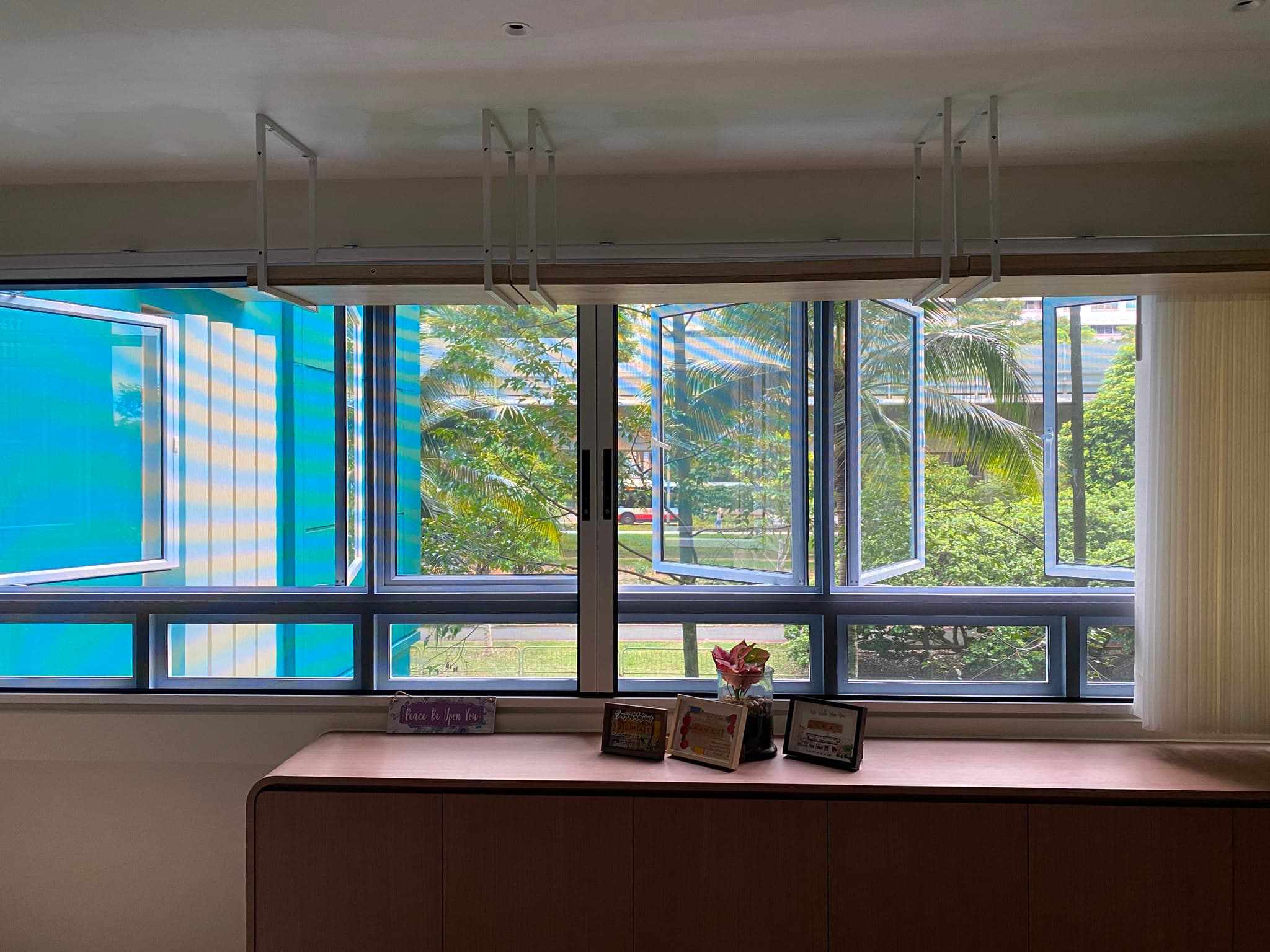
Cat mesh for an HDB window should be considered around the actual opening, the way the household uses it and how easily a cat can reach it. Two windows that look similar may have different dimensions, operating methods and access patterns.
This guide helps Singapore homeowners organise the information that matters before an on-site visit. Final installation suitability, measurements and quotation still need to be confirmed at the home.
1. Identify how each HDB window operates
Begin by noting whether the relevant opening uses sliding panels, casement panels, louvres or another configuration. Record which panels move, where the handles and locks sit, and how far the window is normally opened.
The operating method affects how the opening is measured and how the household will continue to use it. A suitable proposal should not be based on the width and height alone.
- Window configuration and number of panels
- Normal opening direction and travel
- Handles, locks and cleaning access
- Nearby grilles, frames or obstructions
2. Map how your cat reaches the window
Look at the whole room rather than only the opening. Sofas, beds, cabinets, shelves and cat furniture can create a route to a sill or ledge that initially appears difficult to reach.
Observe when your cat visits the area and whether it climbs, investigates gaps or watches activity outside. Kittens and confident climbers may make a frequently opened window a higher priority.
3. Include the household’s ventilation routine
Note when the window is opened, how long it remains open and whether the cat is supervised during those periods. Morning ventilation, cooking, laundry, cleaning and overnight routines can create different access patterns.
The aim is to understand normal family life. A window solution should be assessed in the context of the people who operate it every day, not only under ideal conditions.
- Typical opening times and duration
- Who opens and closes the window
- Periods when the cat is unattended
- Ventilation, cleaning and maintenance needs
4. Inspect any existing mesh, grille or screen
Existing protection should be checked for its present condition. Look across the material, frame, fixings and perimeter for tears, rust, sagging, looseness, damage or gaps.
If the age, installer or material is unknown, include that uncertainty in the professional review. Do not assume that insect mesh or an improvised barrier provides a cat-safety function simply because it covers the opening.
5. Measure the actual opening on site
Photographs can help begin a conversation, but they do not replace an on-site measurement. Openings may not be perfectly square, and the surrounding frame, tracks, handles and usable clearances need to be seen together.
PurrSafe measures suitable openings at the home before confirming the proposed system and installation scope. This avoids treating every HDB window as a standard size.
6. Ask how everyday window use will be preserved
Before accepting a proposal, understand how the window, lock and mesh system will operate after installation. Ask about normal opening, closing, cleaning and access for future maintenance.
A practical installation should support daily family use while addressing the cat-access risk identified during the assessment.
7. Prepare useful information for the site visit
Take one full photo of each priority window, one close-up of the frame and one photo showing the surrounding furniture or access route. Note the rooms your cat uses most and any existing damage or operating difficulty.
PurrSafe’s free Home Safety Assessment can help organise the household risks before the site visit. Final suitability and pricing are confirmed only after the relevant openings have been reviewed and measured.
Your next step
Find your home’s priority openings.
Send a full photo of the opening, a close-up of the frame and a wider photo of the surrounding area. PurrSafe can begin the conversation before arranging any required site visit and measurement.
Common questions
Questions about this guide
Can cat mesh be considered for different HDB window types?
Different window configurations can be assessed, but suitability depends on the actual opening, surrounding frame, operation and installation conditions. PurrSafe confirms this during an on-site visit.
Is every HDB window a standard size?
No standard size should be assumed for a final installation. The relevant opening and surrounding details are measured at the home before the system and scope are confirmed.
Will cat mesh affect how I open my window?
Window operation is part of the on-site review. The proposed arrangement should be explained in relation to normal opening, closing, locking, cleaning and maintenance access.
Can insect mesh be treated as cat safety mesh?
Do not assume that a screen intended for insects is designed for cat safety. Its material, frame, fixings, condition and installation purpose need to be reviewed.
What should I send before requesting a quotation?
Send a full photo of the opening, a frame close-up and a wider image of the surrounding area. These can begin the consultation, but on-site measurement may still be required before quotation.
Continue your research
Related PurrSafe resources
PurrSafe window cat mesh
See the service approach for suitable window openings across Singapore homes.
HDB cat mesh service
Review PurrSafe’s approach to HDB windows, service yards and accessible openings.
How to check existing cat mesh
Inspect an older installation for visible wear, damage and changed operation.
Follow PurrSafe
See installation clips, practical cat-safety tips and updates from Singapore homes.